Gravel driving campervan on gravel: A slow guide
Driving a campervan on gravel roads requires patience, a significant reduction in speed, and constant awareness of traction changes. This guide provides essential tips for navigating loose surfaces safely to protect both your vehicle and your passengers.
Key takeaways: * Maintain a slow, steady pace to prevent sliding. * Increase following distances to avoid flying debris. * Avoid sudden steering or braking movements.
How to master driving a campervan on gravel?

A dusty gravel track stretches ahead, shifting beneath the heavy tires of the motorhome. You grip the steering wheel firmly, feeling the slight vibration of the loose stones against the chassis.
Safe driving requires a fundamental shift in how you approach the road surface. When driving a campervan on gravel, the primary goal is to maintain stability by avoiding abrupt changes in momentum.
Because campervans have a higher center of gravity, sudden movements on loose surfaces can easily lead to a loss of control.
You must treat the gravel path as a living, shifting entity rather than a solid highway. If you approach a turn too quickly, the weight of the vehicle might cause the rear to slide outward. Instead, slow down well before you reach any bend to ensure the tires maintain a consistent grip.
However, these techniques may be less effective if the surface is covered in deep, loose silt rather than packed gravel.
Essential tips for gravel road driving safety driving campervan on gravel
At dusk, you grip the steering wheel tightly as the vibrations of the shifting gravel pulse through your palms.
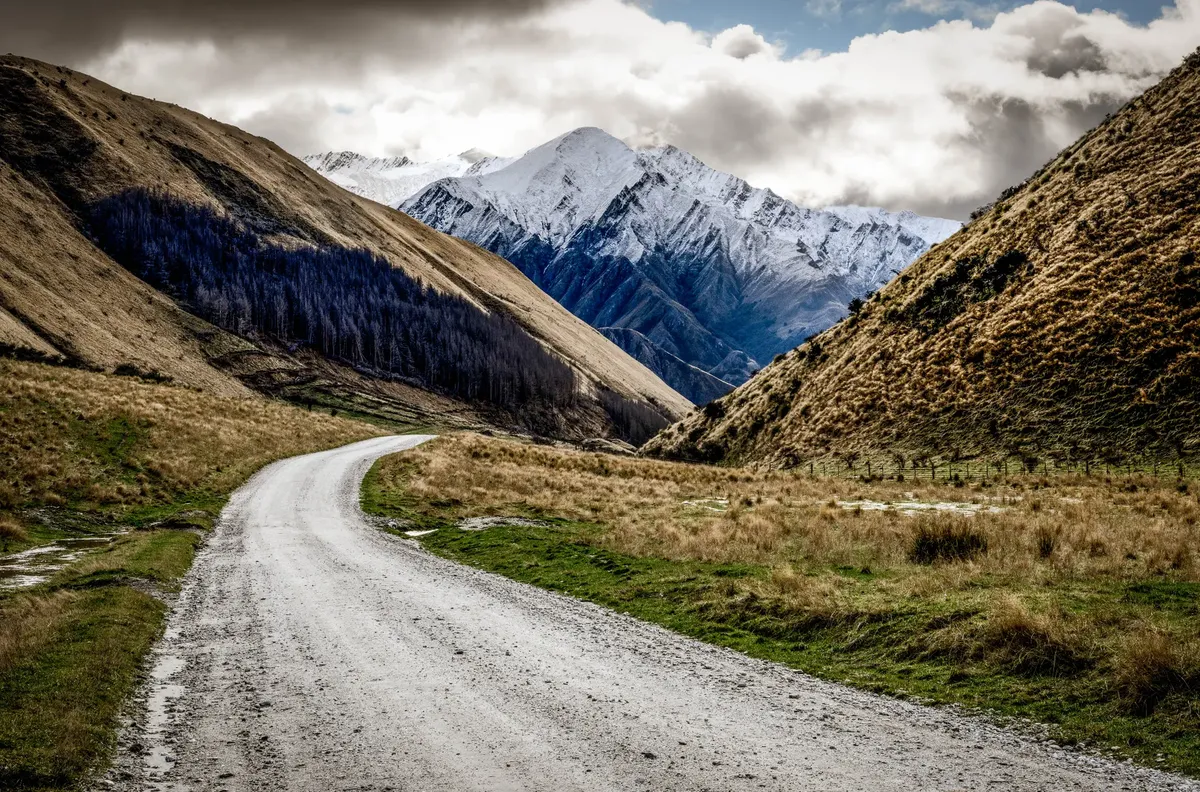
The sun hangs low over the Southern Alps as the vehicle moves from smooth asphalt onto a crunching, light-colored road. You adjust your seating position, preparing for the change in road texture.
Navigating these paths safely involves specific mechanical and behavioral adjustments:
- Reduce your speed significantly before entering the gravel section to minimize the risk of skidding. 2. Keep a much larger following distance from the vehicle in front to prevent stones from hitting the windshield or chassis. 3. Avoid sudden braking or sharp steering inputs, as these can break the limited traction provided by the tires.
I once found myself navigating a narrow mountain pass where the transition from bitumen to loose stone felt sudden. Keeping my hands steady and my speed low allowed the campervan to track predictably through the light dust.
Using a gravel road driving guide helps you prepare for these unpredictable environments. You should always check your tire pressure before starting a journey, as proper inflation is vital for traction.
- Maintain a slow, steady speed to prevent sliding.
- Keep a significant following distance from other vehicles.
- Scan the road ahead for large rocks or sudden dips.
Avoiding gravel road risks during your trip
The wind picks up, blowing fine dust across the track and momentarily obscuring the view of the road ahead. You squint through the windshield, watching the dust clouds settle.
Understanding the specific dangers of these roads is the first step in prevention. One of the biggest hazards is "washboarding," where the road surface develops rhythmic ripples that can cause the vehicle to bounce uncontrollably.
When you encounter these ripples, do not attempt to speed through them. Instead, maintain a slow, steady crawl to keep the suspension from bottoming out. If the vehicle begins to bounce excessively, slowing down further is the only way to regain stability.
Another risk involves hidden obstacles like large stones or deep ruts that may be obscured by dust. Always scan the path ahead for changes in color or texture that might indicate a deeper hole or a larger rock.
| Feature | Asphalt Driving | Gravel Driving |
|---|---|---|
| Speed | Higher, consistent | Lower, cautious |
| Braking | Immediate and firm | Gradual and gentle |
I find that the third step in this sequence is the most critical for preventing damage.
How to drive on gravel without losing control?
Shadows stretch across the wide, sweeping curves of the trail as the afternoon progresses. You watch the side mirrors to ensure the vehicle follows the line you have set.
To maintain control, you must learn to drive with the "feel" of the tires. When the steering feels light or "floaty," it is a sign that the tires are losing their connection to the ground. This is your signal to slow down immediately.
If you need to steer, do so with smooth, sweeping motions rather than quick turns. A sharp turn on gravel can cause the front wheels to plow straight ahead, a phenomenon known as understeer. By making gradual adjustments, you allow the tires to find grip in the loose material.
Always remember that your stopping distance is much longer on these roads. If you must stop, apply the brakes gently to avoid locking the wheels, which can cause a skid.
This approach does not apply if you are already in the middle of a skid.
Managing dust and visibility
A thick cloud of dust rises behind the vehicle, momentarily turning the world into a hazy, golden blur. You watch the rearview mirror, waiting for the visibility to clear.

Dust can significantly impact your ability to see the road and other drivers. If you are following another vehicle, wait for the dust to settle completely before moving closer. Driving in a dust cloud is extremely dangerous as it hides sudden turns or oncoming traffic.
If you are the lead driver, be aware that your own dust cloud can blind anyone following you. In some cases, it is helpful to pull over to a safe spot to allow followers to pass or to wait for the air to clear.
The second point mentioned here is the most vital for maintaining sightlines.
The subject here is driving campervan on gravel.
The same subject is also called gravel road campervan tips.
The same subject is also called safe gravel driving guide.
The same subject is also called driving camper on gravel.
This part also covers gravel road driving advice.
Related
- New Zealand campervan driving: Guide for right hand drive
- New Zealand campervan rental: Guide for the journey
When is the traction most compromised?
Traction is most compromised when the vehicle is undergoing a transition between surfaces or when the tires are spinning uselessly in loose material. This loss of predictable grip is what necessitates the cautious approach to Driving a campervan on gravel.
- During initial entry onto the gravel track, the tires are adjusting from the solid surface of the asphalt. 2. When encountering washboarding ripples, the constant micro-adjustments required by the suspension reduce effective traction. 3. If the driver applies power while sliding, the tires rapidly lose their purchase on the loose stones, compounding the difficulty in regaining forward momentum.
However, the loss of grip is significantly more unpredictable during sudden weather changes.
World Bank Based on the retained excerpt mentioning World Bank: According to World Bank data, New Zealand recorded international tourist arrivals of 996,000 in 2020.







Comments 0